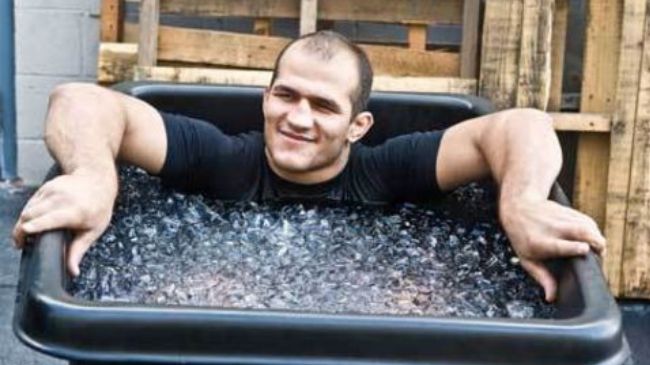
Non è raro vedere atleti, soprattutto sui social network, immergersi nell’acqua gelida. Ma cosa c’è dietro a tutto questo? Saldi principi fisiologici oppure le solite mode passeggere? Scopriamolo insieme!
Quello che segue è un riassunto ed adattamento di un articolo in lingua straniera riportato su Science for Sport. Buona lettura!
Introduzione
Si ricorre a tecniche di recupero come quella delle immersioni in acqua fredda per minimizzare il rischio di infortunio e per evitare il sovrallenamento (overtraining).
Gli effetti delle immersioni in acqua fredda non sono ancora del tutto chiari, si ipotizza che siano utili per il recupero muscolare e la riduzione degli stati infiammatori sia per gli atleti di sport di forza/potenza (allenamento con i sovraccarichi) che di resistenza (corsa, ciclismo). Recenti studi sostengono che il tempo ottimale di immersione (altro…)
Per chi é del settore, Greg Jackson non ha bisogno di presentazioni, tuttavia ci tengo ugualmente a spendere due parole su di lui, nel caso qualcuno non lo conoscesse. G. J. é un coach di arti marziali miste, specializzato nella lotta libera, che allena (altro…)
The HICT, high intensity continuous training, is a training method used for increase the aerobic strength endurance in sports. This method is widely used for combat sports conditioning (boxing, MMA, wrestling…). The objective of high intensity continuous training is improve the resistance to the efforts trough the rise of mitochondrial number in fast twitch muscle fibers (IIa). The IIa type is only muscle fibers which may have this mitochondrial increase for their physiological characteristics.
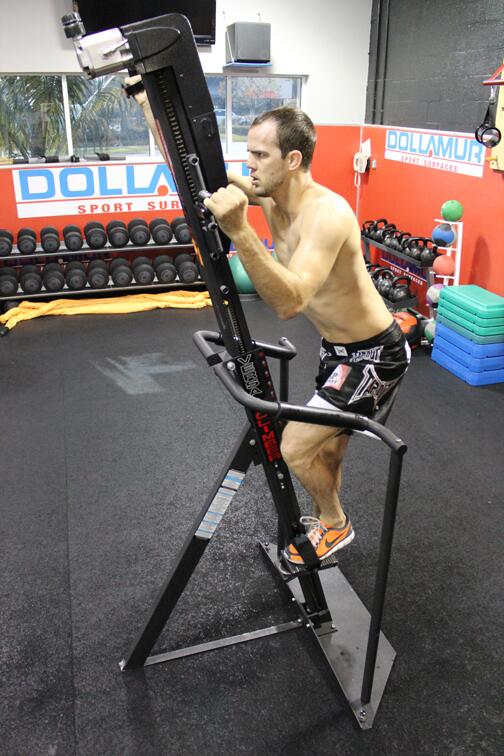
Is necessary utilize not specific exercises for monitoring the principal parameter: heart rate (bpm). The indicate exercises or machines are spinbike, sled dragging, versaclimber. Is very important not exceed the anaerobic threshold (around 155-165 bpm) for obtain the right effects. For some authors, the problem of this training is the decrement of FTa rapid contraction and dimension, therefore is important combine the HICT with plyometrics workouts [1,2].
Example of training
Versaclimber: 15-20′ of continuous work (with the hearth rate under the anaerobic threshold);
Rest (5-8 minutes);
Sandbag Box Step Ups: 15-20′ of continuous work (with the hearth rate under the anaerobic threshold).
To notice, in the video of the versaclimber, the heart rate monitor, an essential tool for a correct work.
Good work.
This article is written by an Italian guy, I apologize for any possible spelling errors. Any correction is welcome.
Riccaldi A. – Strength endurance: la forza resistente per il grappler – Parte 2 (2012) Lochner E. – HICT: un metodo innovativo per le MMA (2016) Wêineck J. – Biologia dello sport (Calzetti Mariucci, 2013) Cravanzola E. – Allenarsi in base alla frequenza cardiaca (2016) 1 Andersen et al. – Myosin heavy chain isoforms in single fibres from m.vastus lateralis of sprinters: influence of training (1994) 2 Malisoux et al. – Calcium sensitivity of human single muscle fibers following plyometric training (2007)



 Top Conditioning